

Overview
 Dr. Linus Carl Pauling concluded that vitamins and other essential micronutrients play a significant role in enhancing health and preventing disease. More than 50 years ago, Dr. Pauling co-founded the Institute to carry out research in this field that he believed would be of enormous importance to public health. For more information about our founder, Dr. Pauling, see the Linus Pauling Papers at OSU Libraries and biographical timeline.
After Pauling's death, the Linus Pauling Institute was re-established on the campus of Oregon State University in Corvallis, Oregon.
For the past 25 years, the Institute has thrived as one of the University’s Research Centers and Institutes. Supported by gifts from individuals, private corporations, and foundations, it also has support from research grants (from private and federal agencies such as the National Institutes of Health) and continuing support from OSU.
Journalists wishing to contact members of the Linus Pauling Institute can consult our media contact page.
Mission
Promote optimal health through cutting-edge research and trusted public outreach.
To accomplish this, we will:
- Discover basic mechanisms underlying the biology of aging and the causes of metabolic and age-related diseases
- Develop effective strategies to extend healthspan by compressing morbidity and reducing mortality from metabolic and age-related diseases through diet, micronutrients, and phytochemicals
- Promote the principles of healthy living and healthy aging in the public arena, thereby empowering people everywhere to add years of health and vitality to their lives
Advancing healthspan, not just lifespan, is our passion
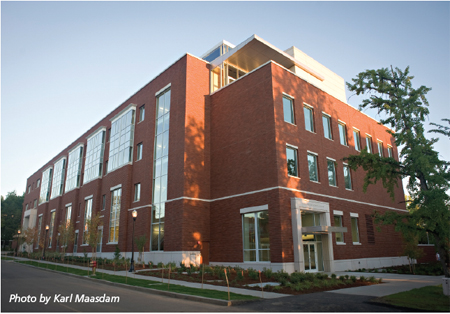 Research programs at the Linus Pauling Institute investigate the role that vitamins and essential minerals (micronutrients) and chemicals from plants (phytochemicals) play in human aging, immune function, and chronic disease.
The goal of these studies is to understand the mechanisms by which diet, micronutrients, and dietary supplements affect disease initiation and progression and can be used in the prevention or treatment of human diseases, thereby enhancing lifespan and healthspan.
More information about micronutrients and phytochemicals, many of which are available as dietary supplements, can be found in the Linus Pauling Institute's Micronutrient Information Center.
LPI Guiding Principles
The Linus Pauling Institute community is committed to a welcoming and inspiring environment for all. We are committed to building a community where all are valued for their unique contributions and identities. We actively affirm the university’s commitment to diversity, equity, and inclusion. Together we strive to:
- Be friendly, patient, welcoming, considerate, generous, and respectful
- Seek to understand
- Enhance integrity
More about the Linus Pauling Institute's guiding principles.