Paige Jamieson, a PhD student in the Nutrition program at Oregon State University, works in the laboratory of Dr. Fred Stevens, a principal investigator at the Institute. At our recent Diet and Optimum Health Conference, Paige presented her work examining gut microbiome data from a clinical trial of xanthohumol supplementation. She found that the response to xanthohumol appeared to be tied to enterotype — a classification of bacterial communities in the human gut. She shares more about that work below.

By Paige Jamieson
I became interested in the gut microbiome during my work with the Xanthohumol Microbiome and Signature study (also known as the XMaS trial) led by my PhD mentor, Dr. Fred Stevens. This was a randomized, placebo-controlled trial in healthy adults investigating the safety of a dietary supplement called xanthohumol, a compound from the hops plant.
One of the trial’s objectives was to learn about the impact of xanthohumol on the human gut microbiome, which is connected to work we conduct in animals (see box below). This investigation also led to observations about “enterotypes,” which are related to the gut microbiome and may be key to understanding xanthohumol’s role in gut health.
What is an Enterotype?
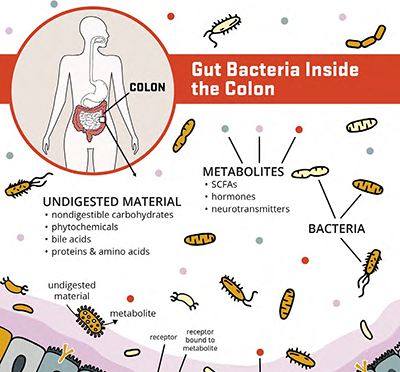
The gut microbiome refers to the diverse community of microorganisms, primarily bacteria and fungi, that inhabit our gastrointestinal tract. This complex ecosystem consists of trillions of microorganisms that play crucial roles in various bodily functions, such as digestion, metabolism, and even regulation of immune function.
The term enterotype is a classification of gut microbial communities found in healthy people. Since our guts have many different types of organisms present, and describing them all would be difficult, an enterotype is a way of grouping based on the dominant types of bacteria present.
Importantly, these classifications are a part of healthy variation in gut microbiomes. The classifications are stable but can change over time since they are influenced by factors like diet, lifestyle, and the environment.
What Enterotype Do You Have?
Scientists have identified two primary enterotypes that are commonly found in the human gut. It is only possible to know which type you have through testing. Although we still have a lot to learn about these enterotypes, each is associated with different long-term dietary patterns.
The first is the Prevotella enterotype, associated with diets low in protein and rich in carbohydrates and simple sugars. Individuals with a Prevotella-dominant gut microbiome often consume plant-based diets.
The second is the Bacteroides enterotype, associated with diets high in protein and animal fat. Individuals who consume a Western diet tend to have enriched Bacteroides populations in their microbiome.
Other enterotypes may exist in the human gut, but they are currently not well defined. So for the purposes of my work, I only considered the role of these two classifications.
How Does This Inform Xanthohumol Research?
The XMaS trial was focused on xanthohumol metabolism and its effects on the gut microbiome. Previous research in laboratory animals suggests that some of the health benefits of xanthohumol might be connected to specific actions on the gut microbiome. In these studies, xanthohumol was both a prebiotic, enhancing beneficial bacteria, and an antibiotic towards other bacteria.
In humans, we found that the response to xanthohumol was quite different from person to person within the trial. Some people’s gut microbiome appeared to change with xanthohumol supplementation, while others did not.
To look for the reason for this variation, we examined each participant’s gut microbiome enterotype. We observed that xanthohumol supplementation only influenced the gut bacterial population of people with the Prevotella enterotype. Those with the Bacteroides enterotype did not show any change.
Implications for Health and Wellness
Understanding your gut microbiome enterotype can offer insights into how your body responds to different dietary components and supplements. And this knowledge will help inform a personalized approach to nutrition.
Further research in this area holds promise for the development of targeted dietary and therapeutic interventions for various health conditions related to the gut microbiome.
The next step for our research with xanthohumol is to investigate its use as a therapy for inflammatory bowel diseases. Since these diseases can involve a dysfunctional gut microbiome, we think xanthohumol might help ameliorate those pathologies.
Considering our work on enterotypes, we now believe that xanthohumol may only be effective in individuals with a Prevotella enterotype.
Exploring the Effects of Tetrahydroxanthohumol
Tetrahydroxanthohumol (TXN) is a synthetic xanthohumol derivative that — in laboratory animals — can counteract some of the negative effects of eating a high-fat diet.
With collaborators at Oregon State University, Dr. Adrian “Fritz” Gombart and Dr. Fred Stevens used a new computational method called a “Transkingdom Network Analysis” to explore connections between TXN, the gut microbiome, and genes associated with the development of disease in animals. One of the key findings in their latest publication is that TXN supplementation modulates the growth of bacteria species in the gut associated with negative health outcomes.
For example, animals eating a high-fat diet had higher-than-normal amounts of Oscillibacter species in the gut and increased inflammatory signals from immune cells in the animal’s adipose (fat) tissue. However, animals eating a high-fat diet supplemented with TXN had reduced gut levels of Oscillibacter, reduced inflammation, improved glucose metabolism, and less weight gain.
This connection with specific gut bacteria provides a solid foundation for future investigations with TXN and the potential to develop innovative therapies for metabolic disorders.
References:
Newman et al. Microbiome 11 (2023); doi: 10.1186/s40168-023-01637-4
Miranda et al. Sci Rep 8 (2018); doi: 10.1038/s41598-017-18992-6