Background and Introduction to the Top 10 Project
In April 2024, the Linus Pauling Institute presented the webinar Aging Well: The Top 10 Micronutrients for Optimal Health. During the webinar, Dr. Emily Ho presented a preview of our new Top 10 Project, featuring the Top 10 brochure and handouts outlining nutritional approaches to bone health, brain health, and supporting a healthy immune system.
Here, we provide an overview of this project, followed by a selection of audience questions answered by experts from the Institute. As always, the webinar video recording is available on our YouTube channel. Additional information can be found on the Top 10 Project website.
What is the Top 10 Project?
Twenty-seven vitamins and minerals are needed to maintain good health. Fortunately, we can get most of these nutrients by consuming a variety of minimally processed foods and beverages.
Experts at the Linus Pauling Institute have identified the 10 nutrients that warrant extra attention because most people in the United States simply don’t get enough of them. Paying attention to these nutrients becomes increasingly important as we age
We call these nutrients the Top 10 Micronutrients for Aging Well — or, simply, The Top 10: calcium, magnesium, potassium, zinc, and vitamins B6, B12, C, D, E, and K.
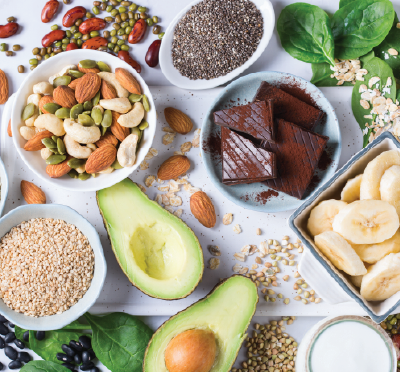
All of these micronutrients can be found in food. Plant-based foods like fruits, vegetables, nuts, beans, and whole grains represent some of the best sources of nutrition, but meat, fish, and dairy are also good micronutrient sources. While regularly consuming a wide variety of plants would help reduce the prevalence of many micronutrient shortfalls, it can not address all of them.
It is always better to get micronutrients from unprocessed or minimally processed food. Whole foods contain a variety of phytochemicals and essential macronutrients, such as fiber, essential fats, and essential amino acids, which are beneficial for health.
Conversely, ultra-processed, shelf-stable packaged foods, such as protein bars, energy drinks, and foods with a lot of preservatives and additives, should be minimized. Although these foods often have vitamins and minerals added to them, they can not provide the full range of nutritional benefits of whole foods.
Dietary supplements also have their place. Some nutrients are more bioavailable from a supplement than from food. For example, vitamin B12 is better absorbed from supplement sources or fortified foods.
This is especially important as we get older because natural, age-related changes in the body can reduce the absorption, storage, and distribution of some nutrients.
These changes can be subtle and occur earlier than most people think, often starting around age 50. Thus, a goal of the Top 10 Project is also to highlight increased nutrient needs in older adults.
What information is available?
At the heart of this project is a brochure describing the Top 10 micronutrients for aging well, the foods that contain them, and the Institute’s recommendation for a daily multivitamin.
Our website’s Top 10 Project page also has an alternate version of the Top 10 brochure with more detailed information. While it is intended as a reference for healthcare and nutrition professionals, it may interest those seeking more in-depth information.
The heath professional version contains the LPI recommendations for each nutrient based on sex and age. If you want to know the LPI recommendations for micronutrients beyond the Top 10 list, we suggest you view our Micronutrients for Health series for both vitamins and minerals.
As part of this project, we will soon release additional documents highlighting the connections between micronutrients and health.
The Top 10 Project will continue to expand in the future. Keep an eye on our Top 10 Project webpage for new documents as they become available.


Top 10 webinar Q&A follow-up: audience questions answered
How were the micronutrients on the Top 10 list selected?
Data from national surveys show what people eat in the United States. Compared to the LPI recommendations, they reveal that many adults, particularly those over 50, fall short of certain nutrient goals.
However, dietary surveys don’t consider things like nutrient absorption. Specific nutrients for which absorption issues are common have also been included on the Top 10 list.
A great example is vitamin B12. Although the amount of vitamin B12 in the diet is not often an issue for people who eat meat, people on certain medications and adults over 50 can have trouble absorbing this vitamin from food.
So many women have low iron levels. Why is iron not listed in the Top 10?
The Institute’s nutrition experts consider iron an “honorable mention” nutrient but decided not to include it in the Top 10. Most adults consume adequate amounts of iron.
Iron needs are increased for women of childbearing age due to regular blood loss through menstruation. Some women in this age group may need iron supplements to prevent anemia. In general, men and post-menopausal women do not need iron supplements and should not take them unless directed by a healthcare professional.
Are there any micronutrient combinations that should be avoided?
Interactions are not usually a problem when combining vitamins or minerals, since it happens naturally when we eat food. Typically, interactions only happen when people take very large supplemental doses.
The most common absorption issues occur with minerals. Taking a calcium supplement with food, for example, can inhibit the absorption of magnesium and iron. So, it is best to take a calcium supplement separately from meals or other mineral supplements.
A similar problem occurs with high zinc supplementation. Regular intake of more than 40 mg of zinc per day can inhibit copper absorption.
How do you know if you fall short in a particular nutrient?
The most accurate method involves analyzing your usual intake using a diet-tracking app or an online program. This is time-consuming, but it provides the most details.
It is easier to assess if your daily diet includes several servings of foods or beverages rich in the nutrient(s) of concern. This is especially important for calcium, magnesium, and potassium, as a daily multivitamin alone is often inadequate to help you meet your needs for these particular minerals.
If you think you need more of a particular vitamin or mineral, a healthcare provider can use blood tests to determine your status for many, but not all, micronutrients.
What are the best foods to eat?
As the Top 10 brochure and the Micronutrient Information Center show, many foods, such as broccoli, almonds, beans, sweet potatoes, and yogurt, are good sources of several vitamins or minerals.
It is difficult to make general food recommendations because everyone has different eating preferences. Just because a particular food is a good source of nutrients doesn’t mean it is a good choice for your diet. Other factors besides nutrition, such as flavor, cost, and culture, also come into play.
Can you recommend a brand of multivitamin?
It is against our policies to recommend a specific supplement brand. We suggest choosing any well-known multivitamin brand that contains most of the essential vitamins and minerals in moderate amounts.
When selecting any supplement, look for those that have third-party verification testing. This is when the manufacturer sends the supplement to an independent laboratory to determine if the amount of each nutrient in the dietary supplement matches the label and that the supplement is free of contaminants.
If a product is tested, a verification logo can sometimes be found on the product label. Other times this verification can be found on laboratory websites.
This is not a perfect system. This service is expensive, and only some companies can afford to send each of its products for testing. However, even if the supplement you choose has yet to be tested, selecting products from a company that submits at least some supplements for testing can provide some general assurance.