An Introduction to Dr. Maria Purice and Her Research
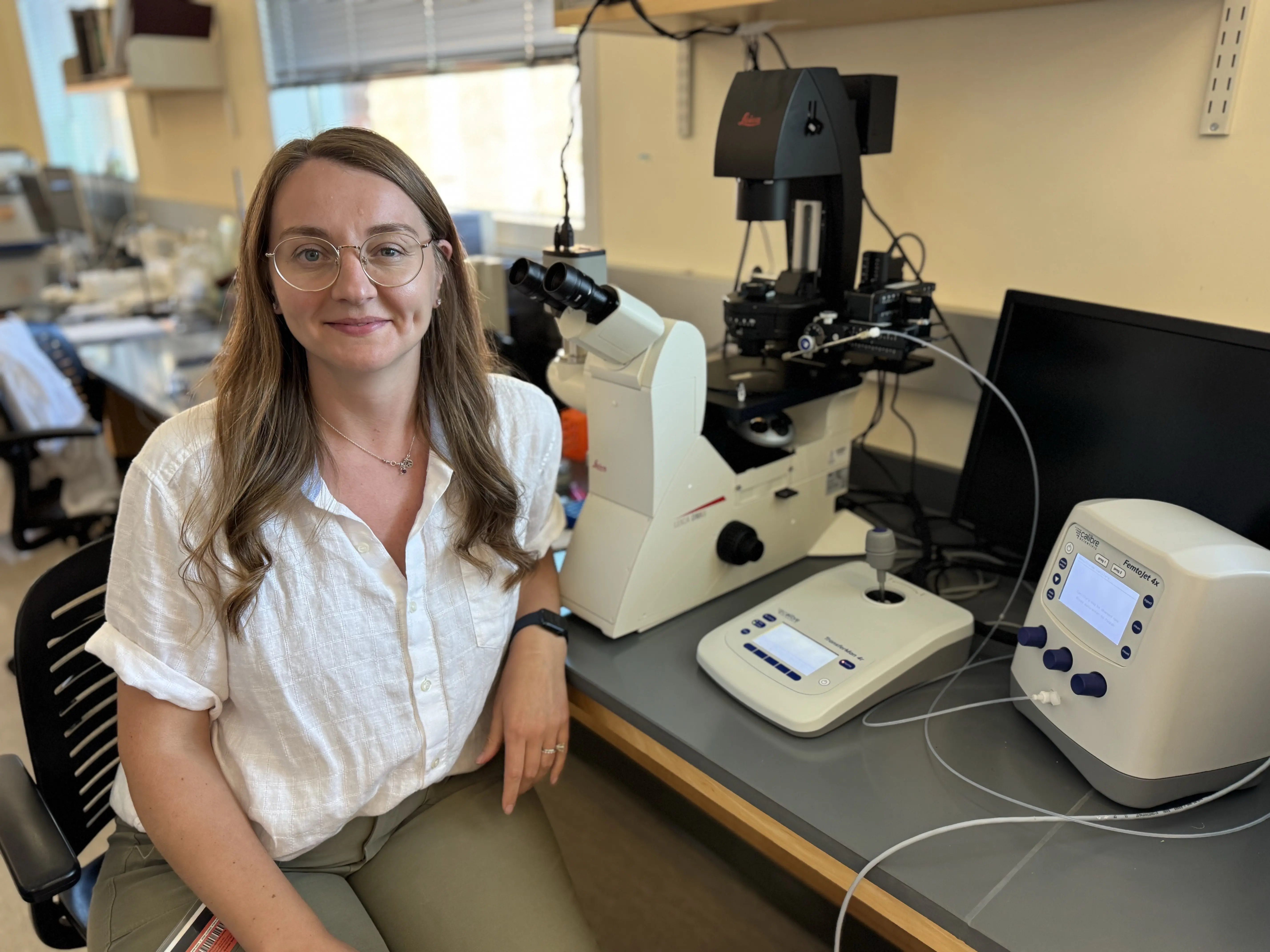
Dr. Maria Purice, a new faculty member at the Linus Pauling Institute, studies glial cells — specialized cells in the brain and nervous system that are essential for nerve function and brain health.
Using the tiny roundworm C. elegans as a model, Dr. Purice’s lab studies how dietary factors, environmental stressors, and even sex differences influence the interactions between glial cells and neurons. Her goal is to identify the molecular pathways that direct proper glial cell function in the quest to develop treatments for age-related and neurodegenerative disorders. We sat down with Dr. Purice to learn more about her expertise and research interests.
What are glial cells?
The nervous system is comprised of two main types of cells: neurons and glial cells (or glia). Neurons, also called nerve cells, are involved in the transmission of electrical signals and information processing. Glial cells play a wide range of regulatory and protective roles and are intimately associated with neurons. Glial subtypes include astrocytes, microglia, and oligodendrocytes.
For about a century, neuroscientists thought that neurons were the brain’s only important cells and that glial cells were merely ‘support cells.’ However, we now know that glial cells are involved in numerous essential functions in the nervous system, such as:
- supporting brain development
- shaping synapses, the connections between neurons
- secreting a variety of signaling compounds
- forming myelin sheaths, which are important for the conduction of nerve signals
- acting as the brain’s immune system
Why do you study glial cells?
For a long time, glia were underappreciated, even though they play many important roles, because we didn’t have the tools to study them. The late Dr. Ben Barres, whom I consider the father of glial cell biology, said something to the effect of, “Glia already know how to save neurons, whereas neuroscientists still haven’t figured it out.” That idea stuck with me.
C. elegans is a powerful model to explore these fundamental questions about how glia function. Despite their simplicity, these worms undergo similar processes of development, nervous system function, behavior, reproduction, and aging as more complex organisms like mammals. This simplicity facilitates a variety of avenues for research, particularly in the nervous system. What we uncover could be key to understanding — and eventually treating — many neurological disorders and keeping the brain healthy, longer.
What have you discovered about glial cells?
During my postdoctoral research, I mapped all of the glial cells in C. elegans — in both males and females — creating a reference of their locations and gene activity. Now, we are developing C. elegans strains where each individual glial subtype is marked with a unique fluorescent label to allow us to better understand their unique functions.
We have learned many things about glial cells: they have highly specialized, subtype-specific functions; they secrete neuropeptides, a large class of signaling compounds in the brain; and they display a range of interesting gene expression patterns.
Can you describe how your research applies to human health?
Research in C. elegans has led to major scientific breakthroughs, including four Nobel Prizes. These discoveries have advanced our understanding of fundamental cellular processes — functions so important to life that these processes are the same in the cells of worms as in our cells.
In C. elegans, glial cells regulate neuronal signaling similarly to human glial cells. Additionally, worms are well-suited for research on aging: they are inexpensive to maintain, they have a short lifespan, and we can use powerful genetic and molecular tools to study them in detail. As a result, we can gather a lot of information (not just for glial cells but for any cell or tissue of interest) in a relatively short amount of time, providing a discovery starting point that can then be pursued in other model systems.
By studying how glial cells function in a system like C. elegans, we can uncover clues about the cellular pathways involved in aging and neurodegenerative disorders like Alzheimer’s disease.
How do nutrition and environment fit into your research?
Just like other cells in the body, glial cells are sensitive to changes in diet and stress. But we still know very little about how these factors affect glial cell health, especially as we age.
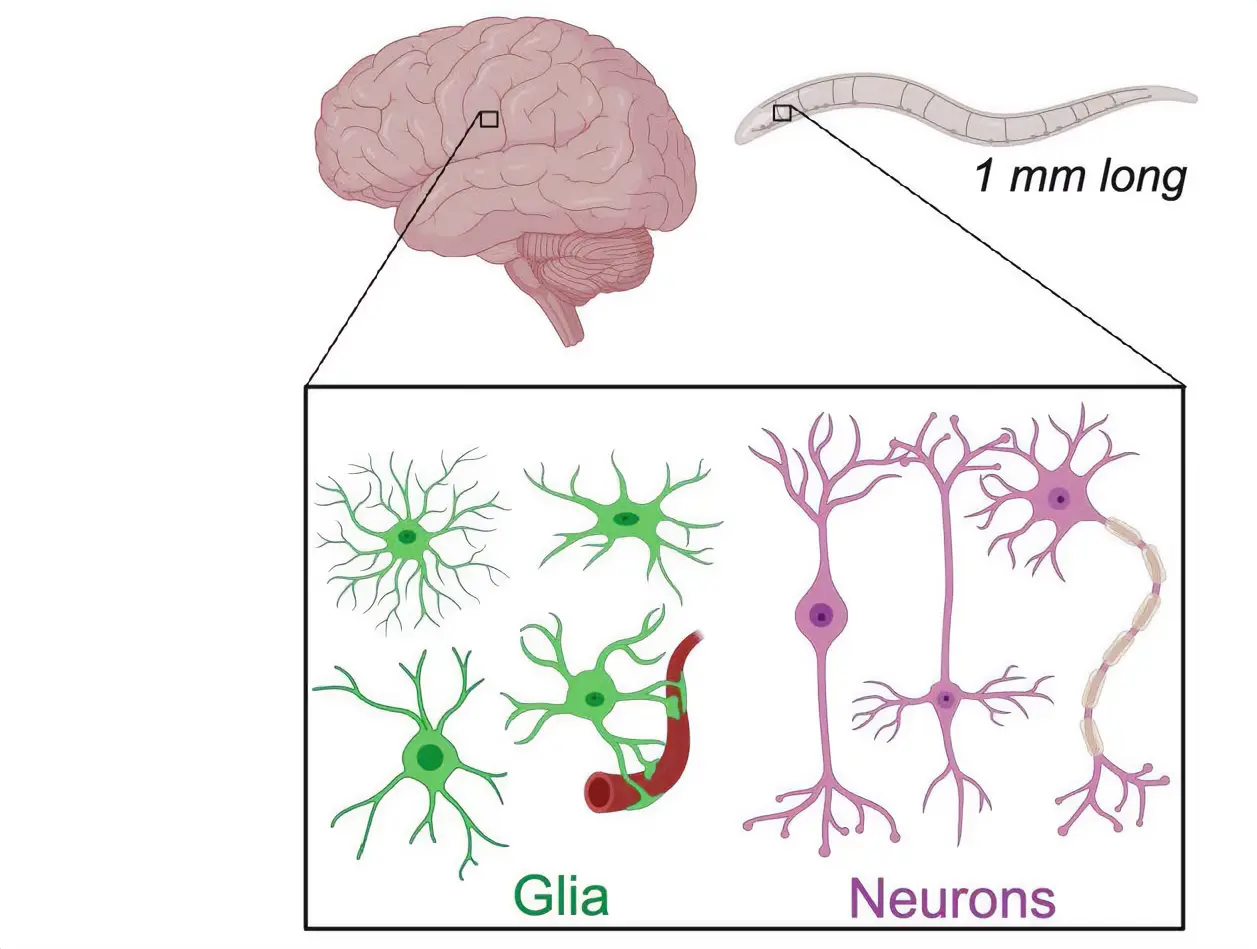
Created with Biorender
I plan to study how changes in diet or environmental stressors affect glial cell function and how that, in turn, affects nearby neurons. With C. elegans, we can tightly control diet and environment, making it possible to identify which external factors influence aging at both the whole-body and cellular levels.
What research questions excite you right now?
I’ll talk about two.
The first is to map out an ‘aging clock’ of all the different glial subtypes and create a template for how individual glial cells age. Some glia may be more sensitive to aging, while others may be resistant. By comparing the molecular pathways that are active in the resistant cells versus sensitive cells, we hope to uncover what protects certain glia from aging.
The second involves neuropeptides, a large class of signaling compounds that influence many cellular responses, such as inflammation, metabolism, and pain sensitivity. Our current knowledge about neuropeptides comes from studies in neurons and beta-cells of the pancreas. We plan to study neuropeptides produced and released by glial cells to see how they support neuronal function, what molecular machinery glial cells use to release neuropeptides, and how this process changes with age and in response to stress.
This is important because glial cells are easier to manipulate than neurons. If we can discover that their activity can be changed through neuropeptide signaling, they could be promising targets for future therapies.
What are some opportunities for collaboration at the LPI?
I envision using C. elegans to screen different compounds being studied by LPI researchers. For example, Dr. Emily Ho studies zinc and sulforaphane from cruciferous vegetables, Dr. Fred Stevens studies xanthohumol from hops, and Dr. Alysia Vrailas-Mortimer studies heavy metals and pesticides.
We can administer these compounds to C. elegans and see if they speed up or slow down the aging process, both at the whole-organism level and in specific tissues and cells. By using a simple organism like C. elegans, we might reveal important processes that are similar in more complex model systems, such as fruit flies, fish, mice, and eventually in clinical trials.
Why did you pursue a career in research?
I actually got started in research by coincidence. My family immigrated from Romania to the US in the late 90s, and I had to put myself through college. I qualified for work-study, and the highest paying job that I could find was working as a research technician in a lab. At that time, I had no idea what research really was or how it was done. Fortunately, the lab I joined and my undergraduate advisor were incredibly supportive and fostered my development as a young scientist. I loved the process of asking questions and figuring out how to answer them.
Ever since then, I told myself that there are probably so many other students who are in the same boat. I’ve always loved mentoring younger people, and now, I am actually doing that. I want to make sure other students get the same opportunities that I had.
For more information about Dr. Purice and her reserach, see her faculty page.