

Summary
- Dietary patterns characterized by high intakes of fruit and vegetables are consistently associated with lower risks of cardiovascular disease and type 2 diabetes mellitus. (More information)
- Although prospective cohort studies provide weak support for an association between total fruit and vegetable consumption and cancer risk, they provide some evidence that high intakes of certain classes of fruit or vegetables are associated with reduced risk of individual cancers. (More information)
- Most observational studies suggest that diets rich in fruit and vegetables may have beneficial effects on bone health during aging. Yet, large randomized controlled trials are needed to confirm such benefits. (More information)
- Adherence to diets rich in fruit and vegetables has been associated with a lower risk of age-related macular degeneration (AMD), a leading cause of blindness in older people. Randomized controlled trials found supplementation with carotenoids — compounds found in fruit and vegetables — may delay the progression to advanced AMD in subjects with the disease. (More information)
- Oxidative stress and inflammation play key roles in the etiology of chronic obstructive lung disease (COPD). Current evidence suggests that fruit and vegetables high in antioxidants like vitamin C, β-carotene, or flavonoids could play a protective role against COPD. (More information)
- Regular consumption of fruit and vegetables may reduce risk of some chronic diseases, thereby improving overall health and longevity. (More information)
- The 2015-2020 Dietary Guidelines for Americans recommend consuming a healthy diet that includes, among other things, a variety of vegetables from all of the subgroups and fruit. (More information)
Other Articles
Introduction
Despite disagreements regarding the optimal components of a healthy diet, the importance of fruit and vegetables is rather undisputed. The results of numerous epidemiological studies provide consistent evidence suggesting associations between diets rich in fruit and vegetables and lower risks of chronic disease. On the other hand, evidence that very high doses of individual micronutrients or phytochemicals found in fruit and vegetables can provide similar health benefits is inconsistent and relatively weak. In addition to essential micronutrients, fruit and vegetables contain thousands of biologically active phytochemicals that are likely to interact in a number of ways to prevent disease and promote health (1). Fruit and vegetables are rich in antioxidants, which help protect the body from oxidative damage induced by pro-oxidants. The best way to take advantage of these complex interactions is to eat a variety of fruit and vegetables.
Disease Prevention
Cardiovascular disease
Prospective cohort studies have consistently reported inverse associations between high intakes of fruit and vegetables and risk of cardiovascular disease (CVD), including coronary heart disease (CHD) and stroke (2-4). A 2017 meta-analysis of prospective cohort studies found a 16% lower risk of CVD with high versus low fruit and vegetable intake and an 8% lower risk with every 200 grams (g)/day increment in daily fruit and vegetable intake in a dose-response analysis (2). Similar risk reductions were reported for daily 200-g increments in fruit and/or vegetable intake and risks of CHD and stroke (2). However, regarding primary CVD prevention in high-risk subjects, evidence that increasing intakes of fruit and vegetable can improve cardiovascular risk factors is scarce because of a lack of long-term intervention studies (5). In a small 12-week intervention study in 109 overweight adults at high risk for CVD, no differences in blood pressure and serum concentrations of low-density lipoprotein (LDL)-cholesterol and C-reactive protein (CRP; a marker of inflammation) were found between participants consuming two (~160 g), four (~320 g), or seven (~560 g) daily servings of fruit and vegetables (6).
Nonetheless, adherence to the Dietary Approaches to Stop Hypertension (DASH) diet, which emphasizes fruit, vegetables, whole grains, poultry, fish, nuts, and low-fat dairy, was found to substantially lower systolic/diastolic blood pressures by 11.4/5.5 mm Hg in hypertensive and 3.5/2.1 mm Hg in normotensive people compared to a typical US diet (for additional information on the DASH diet, see the National Institutes of Health website) (7). Blood pressure lowering effectively reduces CVD risk (8). Adherence to a Mediterranean-style dietary pattern, also characterized by high fruit and vegetable intake, might further contribute to preventing cardiovascular events in healthy and high-risk subjects through normalizing total and LDL-cholesterol concentrations in the circulation (9).
A number of compounds may play a part in the cardioprotective effects of fruit and vegetables, including vitamin C, folate, potassium, fiber, and various phytochemicals (10, 11). However, supplementation with individual micronutrients or phytochemicals has not generally resulted in significantly decreased incidence of cardiovascular events in randomized controlled trials. Thus, in the case of fruit and vegetables, the benefit of the whole may be greater than the sum of its parts. Of note, the World Health Organization (WHO) recommends the daily consumption of >400 g of fruit and vegetables as part of a healthy diet low in fat, sugar, and salt (sodium chloride), in order to minimize the risk of certain non-communicable diseases like CVD and type 2 diabetes mellitus (12).
Type 2 diabetes mellitus
Nearly 10% of the US population is affected by type 2 diabetes mellitus and another 34% has impaired glucose control (prediabetes) that places them at high risk of developing type 2 diabetes (13). Adherence to a Mediterranean-style or Dietary Approaches to Stop Hypertension (DASH) diet — both rich in vegetables, legumes, fruit, and nuts — has been associated with a lower risk of developing type 2 diabetes (14). Yet, a recent meta-analysis of prospective cohort studies failed to find any association between intakes of vegetables, legumes, fruit, or nuts and the risk of type 2 diabetes (15). In contrast, high intakes of whole-grain and dairy foods were linked to a lower risk of type 2 diabetes, while consumption of sugar-sweetened beverages and red and processed meat were associated with an increased risk of diabetes (15). Whether evidence for a potential protective effect of fruit and vegetables regarding type 2 diabetes is more easily detectable when they are combined with other food groups within a diet rather than when their effect is singled out is unclear. A recent meta-analysis of 12 cross-sectional and two prospective cohort studies found a 27% lower risk of type 2 diabetes with the consumption of a vegetarian diet (16). Yet, it is unclear whether the potential benefit of such a diet is linked to the fact that it does not include foods that are associated with a higher diabetes risk (i.e., red and processed meat) and/or because of the inclusion of foods like fruit and vegetables that may be protective. Nevertheless, in the European Prospective Investigation into Cancer and nutrition (EPIC)-Norfolk, a prospective study that followed 3,704 participants for nearly 11 years, a lower risk of type 2 diabetes was linked to higher intakes of vegetables (but not fruit), as well as with a greater diversity of consumed fruit and vegetables (17). A dose-response analysis found an 8% lower risk of diabetes with every increase of two items added to the variety of fruit or vegetables consumed each week (17). A follow-up study also showed that a composite score reflecting fruit and vegetable consumption, derived from circulating concentrations of vitamin C, β-carotene, and lutein, was also inversely associated with the risk of type 2 diabetes in this cohort (18).
Without changes in lifestyle behavior, especially regarding dietary habits and physical activity, individuals with prediabetes will eventually progress to develop overt type 2 diabetes. Strategies promoting healthier eating habits to improve glucose control usually encourage the consumption of more fruit and vegetables and the concomitant reduction of sugar and fat intake. The American Diabetes Association does not specifically emphasize an increase in fruit and vegetable intake for diabetes prevention yet recommends dietary strategies that include reducing caloric and fat intake, as well as increasing intake of whole-grain foods and dietary fiber that can be sourced in fruit and vegetables (19).
Cancer
A plethora of observational studies has investigated the relationship between intakes of fruit and vegetables and risk of developing site-specific cancers. A 2014 report summarized the findings of 27 studies that examined fruit and vegetable consumption in relation to incidental cancer in participants of the ongoing, multicenter European Prospective Investigation into Cancer and nutrition (EPIC) study (20). This report found the highest versus lowest quintile of fruit intake (≥356 g/day vs. ≤89 g/day) to be associated with a 40% lower risk of oropharyngeal, laryngeal, and esophageal cancers and a 20% lower risk of lung cancer. No associations were observed between fruit intake and cancers of the lymphatic system, stomach, pancreas, breast, cervix, prostate, or bladder. There were also no inverse associations between intakes of vegetables and risk of cancer. More recently published EPIC data analyses also failed to find significant inverse associations between fruit and/or vegetable intakes and risk of hepatocellular carcinoma (21), colorectal cancer (22), hormone-receptor-positive breast cancer (23), or differentiated thyroid carcinoma (24). Further, mixed results from recent meta-analyses of observational studies are reported in Table 1, with significant associations noted in bold. Some of the discrepancies might be attributed to study design. Compared to prospective cohort studies, which collect dietary information from participants before they are diagnosed with cancer, retrospective case-control studies are more susceptible to bias in the selection of participants (cases and controls) and with dietary recall (25). For example, this might explain why fruit intake is associated with the risk of esophageal adenocarcinoma in the meta-analysis of six case-control studies but not in that of three cohort studies in the meta-analysis by Li et al. (26). Inaccurate measurements (introducing measurement bias) and changes in the diet during follow-up in prospective cohort studies may also contribute to reporting associations that are proven spurious or to missing true associations. A 2012 meta-analysis of prospective studies suggested that, when compared to direct measurements of plasma carotenoids, the use of a food-frequency questionnaire to assess carotenoid intake introduced measurements errors that led to underestimating the strength of the association between carotenoid intake and reduced breast cancer risk (27).
| Type of Cancer | References | Highest versus Lowest Quantile of Intake | Type of Observational Studies | Risk Ratio [RR] or Odds Ratio [OR] (95% Confidence Interval) |
|---|---|---|---|---|
| All cancer types | Aune et al. (2017) (2) |
Total fruit & vegetables | 14 prospective cohort studies | RR: 0.97 (0.95-0.99)* |
| Vegetables | 19 prospective cohort studies | RR: 0.96 (0.93-0.99)* | ||
| Cruciferous vegetables | 5 prospective cohort studies | RR: 0.84 (0.72-0.97)* | ||
| Green yellow vegetables | 5 prospective cohort studies | RR: 0.88 (0.77-1.00) | ||
| Fruit | 25 prospective cohort studies | RR: 0.96 (0.94-0.99)* | ||
| Citrus fruit | 5 prospective cohort studies | RR: 0.97 (0.90-1.04) | ||
| Bladder cancer | Vieira et al. (2015) (28) |
Total fruit & vegetables | 9 prospective cohort studies | RR: 0.89 (0.75-1.05) |
| Vegetables | 10 prospective cohort studies | RR: 0.92 (0.84-1.01) | ||
| Cruciferous vegetables | 7 prospective cohort studies | RR: 0.85 (0.69-1.06) | ||
| Leafy vegetables | 6 prospective cohort studies | RR: 0.90 (0.78-1.04) | ||
| Fruit | 12 prospective cohort studies | RR: 0.91 (082-1.00) | ||
| Citrus fruit | 8 prospective cohort studies | RR: 0.87 (0.76-0.99)* | ||
| Liu et al. (2015) (29) | Vegetables | 14 case-control studies | RR: 0.76 (0.58-1.00) | |
| 10 prospective cohort studies | RR: 0.92 (0.84-1.02) | |||
| Fruit | 15 case-control studies | RR: 0.76 (0.66-0.88)* | ||
| 12 prospective cohort studies | RR: 0.85 (0.73-0.98)* | |||
| Breast cancer | Aune et al. (2012) (30) | Total fruit & vegetables | 6 prospective cohort studies | RR: 0.89 (0.80-0.99)* |
| Vegetables | 9 prospective cohort studies | RR: 0.99 (0.92-1.06) | ||
| Fruit | 10 prospective cohort studies | RR: 0.92 (0.86-0.98)* | ||
| Colorectal adenoma | Ben et al. (2015) (31) | Total fruit & vegetables | 5 case-control and 3 prospective cohort studies | RR: 0.82 (0.75-0.91)* |
| Vegetables | 12 case-control and 5 prospective cohort studies | RR: 0.91 (0.80-1.02) | ||
| Fruit | 15 case-control and 5 prospective cohort studies | RR: 0.94 (0.92-0.97)* | ||
| Colorectal cancer | Aune et al. (2011) (32) | Total fruit & vegetables | 11 prospective cohort studies | OR: 0.92 (0.86-0.99)* |
| Vegetables | 16 prospective cohort studies | OR: 0.91 (0.86-0.96)* | ||
| Fruit | 14 prospective cohort studies | OR: 0.90 (0.83-0.98)* | ||
| Kashino et al. (2015) (33) | Vegetables | 9 case-control studies | OR: 0.75 (0.59-0.96)* | |
| 6 prospective cohort studies | RR: 1.00 (0.92-1.10) | |||
| Esophageal adenocarcinoma | Li et al. (2014) (26) |
Total fruit & vegetables | 4 case-control studies | RR: 0.61 (0.44-0.84)* |
| Vegetables | 6 case-control studies | RR: 0.75 (0.53-1.06) | ||
| 3 prospective cohort studies | RR: 0.76 (0.54-1.05) | |||
| Fruit | 6 case-control studies | RR: 0.59 (0.38-0.90)* | ||
| 3 prospective cohort studies | RR: 0.99 (0.72-1.36) | |||
| Esophageal cancer | Vingeliene et al. (2016) (34) | Citrus fruit | 5 studies with a prospective design# | RR: 0.85 (0.73-0.99)* |
| Gastric cancer | Wang et al. (2015) (35) | Vegetables | 19 prospective cohort studies | RR: 0.96 (0.88-1.06) |
| Fruit | 22 prospective cohort studies | RR: 0.90 (0.83-0.98)* | ||
| Bae et al. (2016) (36) | Citrus fruit | 5 prospective cohort studies | RR: 0.87 (0.76-0.99)* | |
| Vingeliene et al. (2016) (34) | Citrus fruit | 4 studies with a prospective design# | RR: 0.93 (0.82-1.07) | |
| Hepatocellular carcinoma | Yang et al. (2014) (37) | Vegetables | 9 case-control studies | RR: 0.76 (0.48-1.20) |
| 8 prospective cohort studies | RR: 0.66 (0.51-0.86)* | |||
| Fruit | 19 case-control studies | RR: 0.77 (0.67-0.88)* | ||
| 19 prospective cohort studies | RR: 0.84 (0.75-0.94)* | |||
| Lung cancer | Wang et al. (2015) (38) | Vegetables | 19 case-control studies | RR: 0.62 (0.54-0.70)* |
| 18 prospective cohort studies | RR: 0.88 (0.81-0.97)* | |||
| Fruit | 19 case-control studies | RR: 0.77 (0.67-0.88)* | ||
| 19 prospective cohort studies | RR: 0.84 (0.75-0.94)* | |||
| Vieira et al. (2016) (39) | Total fruit and vegetables | 18 studies with a prospective design# | RR: 0.86 (0.78-0.94)* | |
| Vegetables | 25 studies with a prospective design | RR: 0.92 (0.87-0.97)* | ||
| Cruciferous vegetables | 11 studies with a prospective design | RR: 0.87 (0.79-0.97)* | ||
| Green leafy vegetables | 9 studies with a prospective design | RR: 0.85 (0.75-0.96)* | ||
| Fruit | 29 studies with a prospective design | RR: 0.82 (0.76-0.89)* | ||
| Citrus fruit | 15 studies with a prospective design | RR: 0.85 (0.78-0.93)* | ||
| *Statistically significant associations. #Cohort, nested case-control, and case-cohort studies |
||||
Additional evidence from observational studies, discussed in MIC articles focusing specifically on cruciferous vegetables, garlic, carotenoid-rich vegetables, and legumes suggests that high intakes of certain classes of vegetables are associated with reduced risk of individual cancers. The 2007 report from the World Cancer Research Fund International (WCRF)/American Institute for Cancer Research (AICR) concluded that fruit and non-starchy vegetables were probably protective against some cancers, recommending a daily consumption of five portions (400 g; based on an average portion weighing 80 g) of a variety of vegetables and fruit (40). AICR continuously collates evidence from cohort and randomized controlled studies through its Continuous Update Project (CUP), and updated CUP-derived Cancer Prevention Recommendations are expected to be published in late 2017 (41).
Osteoporosis
Bone turnover
Fruit and vegetables are rich in precursors of bicarbonate ions (HCO3–), which serve to buffer acids in the body. When the quantity of bicarbonate ions is insufficient to maintain normal pH, the body is capable of mobilizing alkaline calcium salts from bone in order to neutralize acids consumed in the diet and generated by metabolism (42). It has been hypothesized that higher consumption of fruit and vegetables could help reduce the net acid content of the diet and preserve calcium in bones, which might otherwise be mobilized to maintain normal pH to the detriment of bone health. Results from the ancillary DASH-Sodium study, which emphasizes the intake of fruit, vegetables, whole-grain foods, and low-fat dairy, supported a beneficial link between bone health and fruit and vegetable intake. Compared to a control diet, one month-administration of the DASH diet to (pre)hypertensive middle-aged adults significantly lowered the rate of bone turnover, as shown by reduced serum concentrations of osteocalcin (OC), a marker of bone formation released by osteoblasts into circulation during the mineralization of newly synthesized collagen. C-terminal telopeptide of type 1 collagen (CTX) — a marker of bone resorption released from bone collagen into circulation following bone degradation by osteoclasts — was also decreased (43). However, more recent randomized controlled interventions found no effect of increasing fruit and vegetable intake on markers of bone turnover (44-46). The results of a placebo-controlled trial in 276 healthy postmenopausal women suggested that supplementing the diet with alkali, either through supplemental potassium citrate or an additional 300 g/day of fruit and vegetables, did not reduce bone turnover, increase bone mineral density (BMD), or blunt the age-associated bone loss over a two-year period (45). The effect of five portions of fruit and vegetables on measures of dietary acid/base balance and bone turnover markers was also reported as a secondary outcome in the Ageing and Dietary Intervention Trial that included 83 healthy older participants (ages, 65-85 years) (46). Compared to habitual fruit and vegetable intakes of ≤2 portions/day, the consumption of five portions per day for 16 weeks increased the alkalinity of the diet but failed to reduce markers of bone turnover (46). There were also no significant reductions in circulating bone turnover markers in postmenopausal women with osteopenia supplemented with six extra servings of fruit and vegetables per day (~400 g/day) for 12 weeks (44).
Bone mineral density
Several observational studies have examined intakes of fruit and vegetables in relation to bone mineral density (BMD) in men and women, providing mixed results (reviewed in 47). In an early cross-sectional analysis of the longitudinal Framingham Osteoporosis Study in elderly adults (mean age, 75 years), baseline intakes of fruit and vegetables were positively associated with BMD at various sites, including trochanter, femoral neck, and radius (48). Baseline fruit and vegetable intakes were also positively associated with longitudinal changes of trochanter BMD over four years in elderly men but not elderly women (48, 49). Two recent cross-sectional studies in Chinese cohorts reported positive relationships between BMD and intakes of fruit rather than vegetables (50, 51). In the cross-sectional analysis of two Hong-Kong-based cohorts of 3,995 older participants (≥65 years), higher daily intakes of fruit — but not vegetables — were associated with significantly higher whole-body and femoral neck BMD in men and women (50). The cross-sectional study of 3,089 Chinese adults (ages, 40-75 years) reported positive associations between whole-body, total hip, and femoral neck BMD and higher intakes of apples, pears, peaches, pineapples, plums, and to a lesser extent, citrus fruit (51). However, the two-year supplementation of 300 g/day of fruit and vegetables failed to reduce BMD loss in healthy postmenopausal women (45).
Risk of fracture
A pooled analysis of data from several prospective cohort studies, including the EPIC-Elderly Greece (9,534 participants), EPIC-Elderly Sweden (3,276 participants), Cohort of Swedish Men (COSM; 20,150 men), Swedish Mammography Cohort (SMC; 17,506 women), and Nurses' Health Study (NHS; 91,552 women), found a 39% higher risk of hip fracture with intakes of fruit and vegetables ≤1 serving/day compared to 4-5 daily servings (52). Further subgroup analysis linked higher hip fracture risk specifically with low intakes of vegetables rather than fruit. Finally, compared to 4-5 daily servings of fruit and vegetables, there was no reduction in hip fracture risk with intakes greater than 5 servings/day (52). The consumption of fruit and vegetables has been recently examined in relation to 415 fracture-related hospitalizations identified during a 14.5-year follow-up of 1,468 elderly participants (≥70 years) of the Perth Longitudinal Study of Aging in Women (PLSAW) (53). Whereas no association was found between fruit intakes and fracture risk, high versus low intake of total vegetables (≥3 servings/day versus <2 servings/day) was associated with a 27% reduced risk of all fractures and a 39% reduced risk of hip fractures. Further analyses suggested an inverse association between consumption of allium vegetables (onion, leek, and garlic) and risk of fracture (53).
Although observational studies suggest a positive relationship between diets rich in fruit and vegetables and bone health during aging, randomized controlled studies are needed to examine the nature of this association.
Eye diseases
Cataracts
Cataracts are thought to be caused by oxidative damage of proteins in the eye's lens induced by long-term exposure to ultraviolet (UV) light (54). The resulting cloudiness and discoloration of the lens leads to vision loss that becomes more severe with age. A 2015 meta-analysis of nine observational studies found a 28% lower risk of age-related cataracts with the highest versus lowest intakes of vegetables (55). In a large Swedish prospective study that followed 30,607 middle-aged and elderly women for a mean 7.7 years, the risk of age-related cataracts has been examined in relation to the estimated total antioxidant capacity of the diet (56). Higher versus lower estimates of total dietary antioxidant capacity were associated with a 13% lower risk of cataracts. Subgroup analyses showed that this inverse association was statistically significant in women younger than 65 years and in corticosteroid users (56). Pooled analyses of observational studies that investigated the relationships between individual nutrients with antioxidant properties and the risk of cataracts have also suggested a lower risk of cataracts with higher intakes or higher blood concentrations of vitamin C, vitamin A, or β-carotene, although the results vary according to study design (i.e., case-control versus cross-sectional versus longitudinal) (57, 58). However, a 2012 review of nine randomized clinical trials found no substantial effect of β-carotene, vitamin C, and vitamin E, administered individually or in combination over 2.1 to 12 years, on the risk of cataracts or cataract surgery (59). In addition, a large randomized controlled trial in 5,802 subjects at high risk for cardiovascular disease recently reported no difference in cataract surgery incidence over a seven-year follow-up period between participants assigned to a Mediterranean diet that included the whole range of antioxidant nutrients and those assigned to a control diet (60). A secondary analysis reported a 29% lower cataract surgery risk in participants in the highest versus lowest tertile of vitamin K1 intake (61).
Age-related macular degeneration
In industrialized countries, degeneration of the macula, located in the center of the retina, is the leading cause of blindness in older adults (62). Long-term light exposure and oxidative damage in the outer segments of photoreceptors may lead to drusen and/or pigment abnormalities in the macula, increasing the risk of age-related macular degeneration (AMD) and central blindness.
Several recent observational studies have examined AMD prevalence, incidence, progression, or severity in relation to dietary patterns. Most of them used constructed scoring systems reflecting the level of adherence to specific dietary patterns by individuals. The European Eye (EUREYE) study examined associations between the prevalence of AMD and dietary patterns among 4,753 individuals from seven European countries. Adherence to the Mediterranean diet was assessed using a Mediterranean Diet Score system that captured high intakes of key food items, such as olive oil, wine, fruit, vegetables or salad, fish, and legumes, and low intakes of meat. High adherence to the Mediterranean Diet was associated with a reduced risk of developing large drusen, but there was no association with the risk of early or advanced AMD (63). In the Carotenoids in the Age-Related Eye Disease Study (CAREDS) that included 1,313 US women (ages, 50-79 years), high adherence to a Mediterranean-like dietary pattern characterized by high intakes of fruit, vegetables, whole grains, legumes, nuts, and fish, and moderate intakes of red meat and alcohol, were found to be associated with a 66% lower risk of early AMD (64). This Mediterranean-like dietary pattern, which is closer to dietary patterns occurring in the US, was also associated with a 26% lower risk of progression to advanced AMD in 2,525 subjects followed for a mean 8.7 years in the Age-Related Eye Disease Study (AREDS) (65). Of note, this association was no longer valid when the analysis was restricted to individuals with a genetically determined susceptibility to AMD, i.e., those homozygous for the risk allele of the complement factor H [CFH] gene (rs1410996) (65). A cross-sectional study that analyzed baseline data from 4,088 AREDS participants, among whom 2,739 had no AMD, 4,599 had early AMD, and 765 had advanced AMD, identified two main dietary patterns: so-called "Oriental" and "Western" patterns (66). High adherence to the "Oriental" dietary pattern characterized by consumption of vegetables, legumes, fruit, fish, whole grains, poultry, and low-fat dairy products was associated with lower risks of early and advanced AMD. In contrast, higher risks of early and advanced AMD were found in individuals with high adherence to a "Western" diet that included red and processed meat, potatoes, French fries, butter, high-fat dairy products, eggs, refined grains, and sweets and desserts (66).
Among observational studies that focused on individual food groups or nutrients, some have suggested that high intakes of fruit, vegetables, or antioxidant nutrients, such as vitamin C, vitamin E, and carotenoids, might be protective against AMD. In two early case-control studies, high intakes of dark-green leafy vegetables especially rich in lutein and zeaxanthin, two carotenoids present in the retina, were associated with a significantly lower risk of developing AMD (67, 68). In a prospective cohort study of more than 118,000 men and women, those who consumed ≥3 servings/day of fruit had a 36% lower risk of developing AMD over the next 12 to 18 years than those who consumed <1.5 servings/day (69). Interestingly, vegetable intake was not associated with the risk of AMD in this cohort. Another study combining lutein and zeaxanthin intake was not associated with the prevalence of intermediate AMD in a cohort of women aged 50-79 years (70). However, further analysis of the data revealed that women younger than 75 years with stable intakes of lutein and zeaxanthin had a 43% lower risk of developing intermediate AMD (70). In the AREDS trial, oral supplementation with β-carotene (15 mg/day), vitamin C (500 mg/day), vitamin E (400 IU/day), zinc (80 mg/day as zinc oxide), and copper (2 mg/day as cupric oxide) for five years was shown to reduce the risk of developing advanced AMD by 25% (71). In a follow-up study — the AREDS2 trial — supplemental lutein (10 mg/day) and zeaxanthin (2 mg/day) in combination with the 'AREDS formulation' only reduced the risk of progression to late AMD in the subset of participants with the lowest dietary intakes of lutein and zeaxanthin (72). A more detailed account of the epidemiological evidence regarding the relationship between dietary and supplemental carotenoids and AMD risk can be found in the article on Carotenoids.
Chronic obstructive pulmonary disease
Chronic obstructive pulmonary disease (COPD) is a condition that combines emphysema and chronic bronchitis, two chronic lung conditions that are characterized by airway obstruction. Smoking and indoor/outdoor pollution are considered to be primary contributors to COPD development, but dietary patterns low in fruit and vegetables and providing inadequate vitamin intakes may also affect lung function and risk for COPD (reviewed in 73, 74). Early observational studies in Europe indicated that higher fruit intakes, especially apple intakes, were associated with higher spirometric values (including forced expiratory volume in 1 second [FEV1]), indicative of better lung function (75-77). In a cross-sectional study of 2,500 middle-aged Welsh men, slower declines in lung function were associated with the consumption of at least five apples weekly compared to no consumption (76). Another study of 2,917 European men followed over 20 years found that each 100 g (3.5 oz) increase in daily fruit consumption was associated with a 24% lower risk of COPD-related mortality (78). Additionally, when compared to a Western dietary pattern of refined grains, cured and red meats, French fries, and desserts, a prudent diet emphasizing fruit, vegetables, fish, and whole grains was associated with a 25%-50% lower risk of COPD in two large cohorts of men (79) and women (80). In a large prospective cohort study that followed 44,335 Swedish men (mean age, 60.2 years) for a mean 13.2 years, the highest versus lowest quintile (≥5.3 servings/day versus <2 servings/day) of fruit and vegetable intakes was associated with a 35% lower risk of developing COPD (81). Subgroup analyses showed that fruit and vegetable intakes were inversely associated with COPD risk in current and former smokers, but not in men who never smoked. Because oxidative stress and inflammation play key roles in the etiology of chronic obstructive lung disease, it has been suggested that fruit and vegetables high in antioxidants, such as vitamin C, β-carotene, or flavonoids, could play a protective role against COPD. A three-year randomized controlled study in 120 patients with COPD (mean age, 68.1 years) assigned to a diet rich in antioxidants, such as fresh fruit, fruit juice, and vegetables, or a control diet has provided support for the antioxidant hypothesis (82). Shifting to a higher consumption of fruit and vegetables prevented the decline of lung function observed in subjects who consumed the control diet (82).
Asthma
Environment and lifestyle changes, including shifts toward unhealthy diets, are thought to contribute to the increasing prevalence of asthma and allergic diseases in industrialized countries. Observational studies that examined asthma and allergic symptoms in relation to fruit and vegetable intakes have provided mixed results (83). A cross-sectional analysis of a population-based study in 32,644 Portuguese adults identified five dietary patterns, of which one included fish, fruit, and vegetables — three essential components of the Mediterranean diet. This dietary pattern was found to be inversely associated with self-reported asthma symptoms and self-reported use of asthma drugs — yet not with self-reported medical diagnosis of asthma (84). In contrast, the most recent cross-sectional study of 3,202 participants in the European Global Allergy and Asthma Network of Excellence (GA2LEN) showed no association between fruit and vegetable intake and risk of asthma and chronic rhino-sinusitis (85). A 2017 systematic review identified 58 studies (in addition to the two above-cited studies) reporting fruit and vegetable intake in relation to lung function, wheeze, or asthma, of which 30 were cross-sectional studies and 41 conducted in children and/or adolescents (83). A majority of studies (8 in adults and 22 in children) reported inverse associations between diets high in fruit and vegetables and risk of asthma and/or wheeze: 20 studies (8 in adults and 12 in children) showed that intakes of either fruit or vegetables were inversely associated with asthma and/or wheeze, and eight studies (one in adults and seven in children) found no associations. Pooled data analyses showed an inverse association between vegetable intake and risk of asthma, as well as fruit intake and asthma severity and risk of wheeze (83). A previous meta-analysis of observational studies reported lower risks of wheeze and asthma with higher intakes of fruit and vegetables in adults and children in cross-sectional studies, but not all prospective cohort studies have supported these findings (86). Subgroup analyses also suggested inverse associations between intakes of apples, citrus fruit, and tomatoes and risks of wheeze and asthma. Finally, pooled analyses of prospective cohort studies have revealed no association between fruit or vegetable intake during pregnancy and risk of wheeze or asthma in the offspring (86).
Cognitive decline and neurodegenerative disease
Observational studies
Results from most cross-sectional and longitudinal studies suggest that diets rich in fruit and vegetables might help prevent age-related cognitive deterioration and reduce the risk of neurodegenerative diseases like Alzheimer's disease (AD) (87). A 2014 systematic review identified 11 prospective cohort studies (88), of which four examined fruit and vegetable intakes in relation to incidence of neurodegenerative diseases. All four prospective studies reported inverse associations between consumption of fruit and vegetables and risk of developing mild cognitive impairments or dementia, including AD (89-92). Among the seven prospective cohort studies positively linking fruit and vegetable intakes to better cognitive performance (reviewed in 88), a two-year follow-up of 13,388 women (mean age, 74 years) in the Nurses’ Health Study (NHS) found less cognitive decline in those in the highest versus lowest intakes of green leafy vegetables, cruciferous vegetables, and legumes (93). Fruit consumption was not associated with changes in cognitive performance in this study (93). However, a more recently published NHS study in 16,010 women analyzed intakes of major flavonoid-containing foods in relation to cognitive test scores and reported less cognitive decline with higher long-term intakes of strawberries and blueberries (94). Finally, a meta-analysis of 13 prospective cohort studies showed better global cognition in healthy older adults consuming the Mediterranean diet compared to control diets. In contrast, there were no differences in measures of episodic, semantic, and working memory between diets (95).
Dietary interventions
To date, only a few interventions have examined the overall effect of fruit- and vegetable-rich diets on cognition in cognitively healthy older adults. One trial assessed cognitive changes in 334 older adults (mean age, 66.9 years) at high risk for cardiovascular disease (CVD) randomly assigned to either a Mediterranean diet supplemented with extra-virgin olive oil, a Mediterranean diet supplemented with nuts, or a control diet (96). Following a median of 4.1 years, both Mediterranean diets prevented the deterioration of cognitive function that was observed in those ascribed the control diet. Compared to participants in the control diet group, those who followed the Mediterranean diet plus nuts had improved composite cognitive test scores for memory, while those in the Mediterranean diet plus olive oil group had better composite scores for frontal function and global cognition (96). However, in a six-month trial in 137 CVD-free Australian adults (mean age, 72 years), consumption of a Mediterranean diet rich in fruit, legumes, dairy, nuts, olive oil, and seafood did not result in improved cognitive function — measured by a battery of 13 neuropsychological tests — compared to the habitual diet (97, 98).
Mortality
Because regular consumption of fruit and vegetables may reduce the risk of some chronic diseases, it may also improve overall health and longevity. A 2017 meta-analysis of 95 prospective cohort studies found that daily consumption of fruit and vegetables was inversely associated with cause-specific and all-cause mortality (2). The risk of all-cause mortality was found to be 24% lower with five daily serving of fruit and vegetables combined (~400 mg/day) compared to little or no daily intake of fruit and vegetables. Five daily servings of fruit and vegetables were also associated with lower risks of cardiovascular-related (-19%) and cancer-related (-12%) mortality. In addition, the risk of all-cause mortality was lower with higher intakes of specific types of fruit and vegetables. There was evidence of lower risk of all-cause mortality with the highest versus lowest intake level of apples (-20%), berries (-8%), citrus fruit (-10%), cruciferous vegetables (-12%), and green leafy vegetables (-8%). This meta-analysis further reported a reduced risk of all-cause mortality with both cooked (-13%) and raw vegetable (-12%) intakes (2).
Although the Dietary Guidelines for Americans recommend fresh, frozen, and canned fruit equally, the consumption of the latter has been associated with increased risks of all-cause and cardiovascular related mortality in a pooled analysis of three UK-based prospective studies found with consumption of tinned fruit (99). While added sugar content in tinned fruit or exposure to bisphenol A (a chemical component of tin cans) may explain these results, further studies are needed to clarify whether fresh fruit and canned fruit can provide similar health benefits when included as part of a healthy diet.
Finally, although increasing daily intakes of fruit and vegetables would very likely reduce the number of premature deaths caused by cardiovascular disease and cancer in the US population, it is estimated that about 8 in 10 Americans do not meet the current intake recommendations (100).
Intake Recommendations
The 2015-2020 Dietary Guidelines for Americans — issued jointly by the US Department of Health and Human Services and the US Department of Agriculture — recommend to consume a healthy diet which includes, among other things, a variety of vegetables from all of the subgroups and fruit, especially whole fruit (101). In the 2015-2020 Dietary Guidelines for Americans, the unit of measure of a fruit or vegetable serving size is the cup-equivalent (c-eq). In general, one cup-equivalent of fruit corresponds to (1) one cup of cut-up, raw, or canned fruit; (2) one cup (eight fluid ounces) of 100% fruit juice; or (3) one-half cup of dried fruit. Table 2 provides examples of the size of specific fruit counting as one cup-equivalent.
| Fruit | Examples of One Cup-equivalent of Fruit |
|---|---|
| Apple | 1 small |
| Banana | 1 large |
| Grapefruit | 1 medium |
| Grapes | 32 seedless grapes |
| Peach | 1 large |
| Pear | 1 medium |
| Plum | 2 large or 3 medium |
| Strawberries | 8 large berries |
| 100% fruit juice | 8 fluid ounces (1 cup) |
| Dried fruit (e.g., raisins, apricots) | ½ cup |
One cup-equivalent of vegetables generally corresponds to one cup of raw or cooked vegetables or vegetable juice. One exception is leafy greens (e.g., spinach, romaine, watercress, dark-green leafy lettuce, endive, escarole) for which one cup-equivalent corresponds to one cup of cooked or two cups of raw vegetables. Table 3 provides specific examples of what counts as one cup-equivalent of vegetables.
| Vegetables | Examples of One Cup-equivalent of Vegetables |
|---|---|
| Dark-green vegetables | |
| Greens (e.g., collards, kale) | 1 cup, cooked |
| Raw leafy greens (e.g., watercress, endive, romaine) | 2 cups, raw |
| Spinach | 1 cup, cooked 2 cups, raw |
| Red and orange vegetables | |
| Carrots | 1 cup, chopped, raw or cooked 2 medium 1 cup of baby carrots |
| Red peppers | 1 large pepper |
| Tomatoes | 1 large, raw 1 cup, chopped, raw, canned, or cooked |
| Sweet potatoes | 1 large, baked |
| Legumes | |
| Dry beans and peas | 1 cup, whole or mashed, cooked |
| Starchy vegetables | |
| Corn, yellow or white | 1 large ear |
| White potatoes | 1 medium, boiled or baked |
| Other vegetables | |
| Celery | 1 cup, diced or sliced, raw or cooked 2 large stalks |
| Green peppers | 1 large pepper |
| Lettuce | 2 cups, raw, shredded or chopped |
| Onions | 1 cup, chopped, raw or cooked |
The 2015-2020 Dietary Guidelines for Americans provides dietary recommendations, including amounts of fruit and vegetables, designed to meet nutrient needs and Dietary Guidelines standards, for those who choose to follow either a healthy US-style eating pattern, a healthy Mediterranean-style eating pattern, or a healthy vegetarian eating pattern (101). The recommendations are based on estimated energy needs that vary with age, gender, and level of physical activity. Recommended daily intakes of fruit and vegetables at all calorie requirement levels can be found in the '2015-2020 Dietary Guidelines for Americans' report (see Appendices 3-5) (101). Table 4 provides the amounts of fruit and vegetables (expressed in cup-equivalents) that are recommended at the 2,000-calorie per day level. Regardless of the chosen eating pattern, consumption of a variety of different vegetables and fruit is recommended, including all fresh, frozen, and canned dark-green, red, and orange vegetables, starchy vegetables, legumes (peas and beans), and all fresh, frozen, canned, and dried fruit and 100% fruit juice.
| Food | Healthy Eating Patterns | ||
|---|---|---|---|
| US-style | Mediterranean-style | Vegetarian | |
| Vegetables (c-eq/day) | 2½ | 2½ | 2½ |
| Dark-green vegetables (c-eq/week) | 1½ | 1½ | 1½ |
| Red and orange vegetables (c-eq/week) | 5½ | 5½ | 5½ |
| Legumes (c-eq/week) | 1½ | 1½ | 1½ |
| Starchy vegetables (c-eq/week) | 5 | 5 | 5 |
| Other vegetables (c-eq/week) | 4 | 4 | 4 |
| Fruit (c-eq/day) | 2 | 2½ | 2 |
| *Recommendations for fruit and vegetable intakes at the 2,000-calorie per day level. Estimates of daily calorie needs according to age, gender, and physical activity can be found in the Appendix 2 of the ‘2015-2020 Dietary Guidelines for Americans’ report (101). c-eq, cup-equivalents |
|||
The nonprofit organization, Produce for Better Health Foundation (PBH), has partnered with the US Centers for Disease Control and Prevention (CDC) to develop the Fruits & Veggies — More Matters®health initiative, which aims to help Americans increase their consumption of fruit and vegetables for better health (104). Other initiatives like the US Department of Agriculture (USDA)'s ChooseMyPlate.gov have been developed to help everyone make healthier dietary choices, particularly by adding more fruit and vegetables to daily meals.
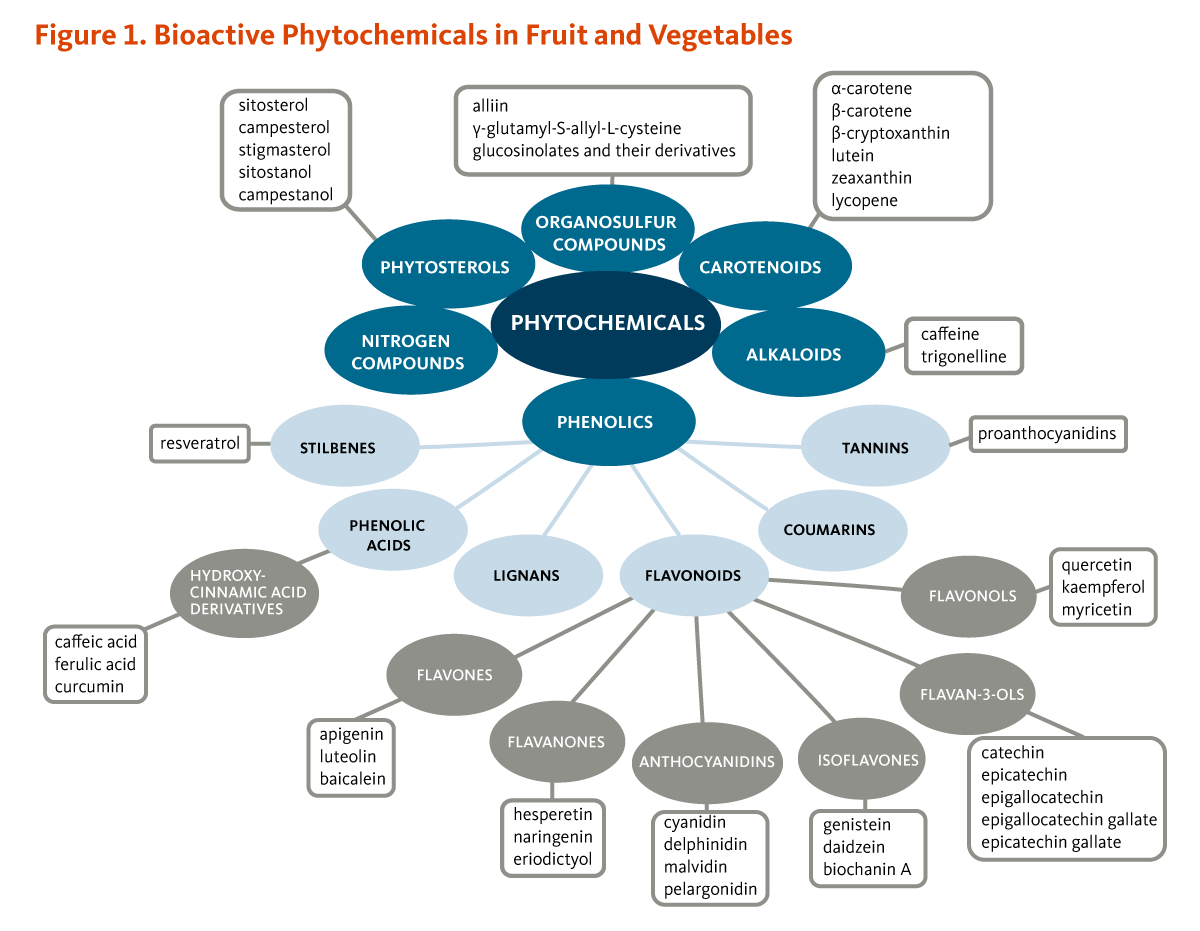
Finally, vegetables and fruit not only are a great source of micronutrients, dietary fiber, and unsaturated fat, they also supply a wide range of biologically active phytochemicals (Figure 1) that contribute to the health benefits of plant foods. Information regarding the functions and health benefits of specific micronutrients and phytochemicals can be found in articles on vitamins, minerals, and dietary phytochemicals.
Authors and Reviewers
Originally written in 2003 by:
Jane Higdon, Ph.D.
Linus Pauling Institute
Oregon State University
Updated in December 2005 by:
Jane Higdon, Ph.D.
Linus Pauling Institute
Oregon State University
Updated in May 2009 by:
Victoria J. Drake, Ph.D.
Linus Pauling Institute
Oregon State University
Updated in October 2017 by:
Barbara Delage, Ph.D.
Linus Pauling Institute
Oregon State University
Reviewed in January 2018 by:
Dagfinn Aune, Ph.D.
Department of Epidemiology and Biostatistics
School of Public Health
Imperial College London, St. Mary's Campus
London, United Kingdom
Copyright 2003-2026 Linus Pauling Institute
Figure Alternative Text
Figure 1. Bioactive phytochemicals in fruit and vegetables
The figure illustrates the major categories of bioactive phytochemicals found in fruit and vegetables, along with representative compounds in each subclass. At the center of the figure is a dark-blue oval labeled “Phytochemicals.” Six major classes surround this: nitrogen compounds, phytosterols, organosulfur compounds, carotenoids, alkaloids, and phenolics.
Several subclasses branch out from “phenolics,” each shown in a light-blue oval with example compounds: stilbenes (resveratrol), phenolic acids (including hydroxycinnamic acid derivatives like caffeic acid, ferulic acid, and curcumin), lignans, tannins (proanthocyanidins), coumarins, and flavonoids. Additional branches extend from “flavonoids,” including flavones (apigenin, luteolin, baicalein), flavanones (hesperetin, naringenin, eriodictyol), anthocyanidins (cyanidin, delphinidin, malvidin, pelargonidin), isoflavones (genistein, daidzein, biochanin A), flavan-3-ols (catechin, epicatechin, epigallocatechin, epigallocatechin gallate, epicatechin gallate), and flavonols (quercetin, kaempferol, myricetin).
References
- Liu RH. Health-promoting components of fruits and vegetables in the diet. Adv Nutr. 2013;4(3):384s-392s. (PubMed)
- Aune D, Giovannucci E, Boffetta P, et al. Fruit and vegetable intake and the risk of cardiovascular disease, total cancer and all-cause mortality-a systematic review and dose-response meta-analysis of prospective studies. Int J Epidemiol. 2017;46(3):1029-1056. (PubMed)
- Gan Y, Tong X, Li L, et al. Consumption of fruit and vegetable and risk of coronary heart disease: a meta-analysis of prospective cohort studies. Int J Cardiol. 2015;183:129-137. (PubMed)
- He FJ, Nowson CA, Lucas M, MacGregor GA. Increased consumption of fruit and vegetables is related to a reduced risk of coronary heart disease: meta-analysis of cohort studies. J Hum Hypertens. 2007;21(9):717-728. (PubMed)
- Hartley L, Igbinedion E, Holmes J, et al. Increased consumption of fruit and vegetables for the primary prevention of cardiovascular diseases. Cochrane Database Syst Rev. 2013(6):Cd009874. (PubMed)
- McEvoy CT, Wallace IR, Hamill LL, et al. Increasing fruit and vegetable intake has no dose-response effect on conventional cardiovascular risk factors in overweight adults at high risk of developing cardiovascular disease. J Nutr. 2015;145(7):1464-1471. (PubMed)
- Appel LJ, Moore TJ, Obarzanek E, et al. A clinical trial of the effects of dietary patterns on blood pressure. DASH Collaborative Research Group. N Engl J Med. 1997;336(16):1117-1124. (PubMed)
- Law MR, Morris JK, Wald NJ. Use of blood pressure lowering drugs in the prevention of cardiovascular disease: meta-analysis of 147 randomised trials in the context of expectations from prospective epidemiological studies. BMJ. 2009;338:b1665. (PubMed)
- Rees K, Hartley L, Flowers N, et al. 'Mediterranean' dietary pattern for the primary prevention of cardiovascular disease. Cochrane Database Syst Rev. 2013(8):Cd009825. (PubMed)
- Alissa EM, Ferns GA. Dietary fruits and vegetables and cardiovascular diseases risk. Crit Rev Food Sci Nutr. 2017;57(9):1950-1962. (PubMed)
- Tang GY, Meng X, Li Y, Zhao CN, Liu Q, Li HB. Effects of Vegetables on Cardiovascular Diseases and Related Mechanisms. Nutrients. 2017;9(8). (PubMed)
- World Health Organization. Increasing fruit and vegetable consumption to reduce the risk of noncommunicable diseases. 17 June 2017. Available at: http://www.who.int/elena/titles/fruit_vegetables_ncds/en/. Accessed 10/5/17.
- Centers for Disease Control and Prevention. US National Diabetes Statistics Report. 17 July 2017. Available at: https://www.cdc.gov/diabetes/data/statistics/statistics-report.html. Accessed 10/4/17.
- Jannasch F, Kroger J, Schulze MB. Dietary patterns and type 2 diabetes: a systematic literature review and meta-analysis of prospective studies. J Nutr. 2017;147(6):1174-1182. (PubMed)
- Schwingshackl L, Hoffmann G, Lampousi AM, et al. Food groups and risk of type 2 diabetes mellitus: a systematic review and meta-analysis of prospective studies. Eur J Epidemiol. 2017;32(5):363-375. (PubMed)
- Lee Y, Park K. Adherence to a vegetarian diet and diabetes risk: a systematic review and meta-analysis of observational studies. Nutrients. 2017;9(6). (PubMed)
- Cooper AJ, Sharp SJ, Lentjes MA, et al. A prospective study of the association between quantity and variety of fruit and vegetable intake and incident type 2 diabetes. Diabetes Care. 2012;35(6):1293-1300. (PubMed)
- Cooper AJ, Sharp SJ, Luben RN, Khaw KT, Wareham NJ, Forouhi NG. The association between a biomarker score for fruit and vegetable intake and incident type 2 diabetes: the EPIC-Norfolk study. Eur J Clin Nutr. 2015;69(4):449-454. (PubMed)
- Bantle JP, Wylie-Rosett J, Albright AL, et al. Nutrition recommendations and interventions for diabetes: a position statement of the American Diabetes Association. Diabetes Care. 2008;31 Suppl 1:S61-78. (PubMed)
- Bradbury KE, Appleby PN, Key TJ. Fruit, vegetable, and fiber intake in relation to cancer risk: findings from the European Prospective Investigation into Cancer and Nutrition (EPIC). Am J Clin Nutr. 2014;100 Suppl 1:394s-398s. (PubMed)
- Bamia C, Lagiou P, Jenab M, et al. Fruit and vegetable consumption in relation to hepatocellular carcinoma in a multi-centre, European cohort study. Br J Cancer. 2015;112(7):1273-1282. (PubMed)
- Leenders M, Siersema PD, Overvad K, et al. Subtypes of fruit and vegetables, variety in consumption and risk of colon and rectal cancer in the European Prospective Investigation into Cancer and Nutrition. Int J Cancer. 2015;137(11):2705-2714. (PubMed)
- Emaus MJ, Peeters PH, Bakker MF, et al. Vegetable and fruit consumption and the risk of hormone receptor-defined breast cancer in the EPIC cohort. Am J Clin Nutr. 2016;103(1):168-177. (PubMed)
- Zamora-Ros R, Beraud V, Franceschi S, et al. Consumption of fruits, vegetables and fruit juices and differentiated thyroid carcinoma risk in the European Prospective Investigation into Cancer and Nutrition (EPIC) study. Int J Cancer. 2017;142(3):449-459. (PubMed)
- Willett W. Nutritional Epidemiology. 2nd ed. New York: Oxford University Press; 1998.
- Li B, Jiang G, Zhang G, et al. Intake of vegetables and fruit and risk of esophageal adenocarcinoma: a meta-analysis of observational studies. Eur J Nutr. 2014;53(7):1511-1521. (PubMed)
- Aune D, Chan DS, Vieira AR, et al. Dietary compared with blood concentrations of carotenoids and breast cancer risk: a systematic review and meta-analysis of prospective studies. Am J Clin Nutr. 2012;96(2):356-373. (PubMed)
- Vieira AR, Vingeliene S, Chan DS, et al. Fruits, vegetables, and bladder cancer risk: a systematic review and meta-analysis. Cancer Med. 2015;4(1):136-146. (PubMed)
- Liu H, Wang XC, Hu GH, et al. Fruit and vegetable consumption and risk of bladder cancer: an updated meta-analysis of observational studies. Eur J Cancer Prev. 2015;24(6):508-516. (PubMed)
- Aune D, Chan DS, Vieira AR, et al. Fruits, vegetables and breast cancer risk: a systematic review and meta-analysis of prospective studies. Breast Cancer Res Treat. 2012;134(2):479-493. (PubMed)
- Ben Q, Zhong J, Liu J, et al. Association between consumption of fruits and vegetables and risk of colorectal adenoma: a PRISMA-compliant meta-analysis of observational studies. Medicine (Baltimore). 2015;94(42):e1599. (PubMed)
- Aune D, Lau R, Chan DS, et al. Nonlinear reduction in risk for colorectal cancer by fruit and vegetable intake based on meta-analysis of prospective studies. Gastroenterology. 2011;141(1):106-118. (PubMed)
- Kashino I, Mizoue T, Tanaka K, et al. Vegetable consumption and colorectal cancer risk: an evaluation based on a systematic review and meta-analysis among the Japanese population. Jpn J Clin Oncol. 2015;45(10):973-979. (PubMed)
- Vingeliene S, Chan DS, Aune D, et al. An update of the WCRF/AICR systematic literature review on esophageal and gastric cancers and citrus fruits intake. Cancer Causes Control. 2016;27(7):837-851. (PubMed)
- Wang Q, Chen Y, Wang X, Gong G, Li G, Li C. Consumption of fruit, but not vegetables, may reduce risk of gastric cancer: results from a meta-analysis of cohort studies. Eur J Cancer. 2014;50(8):1498-1509. (PubMed)
- Bae JM, Kim EH. Dietary intakes of citrus fruit and risk of gastric cancer incidence: an adaptive meta-analysis of cohort studies. Epidemiol Health. 2016;38:e2016034. (PubMed)
- Yang Y, Zhang D, Feng N, et al. Increased intake of vegetables, but not fruit, reduces risk for hepatocellular carcinoma: a meta-analysis. Gastroenterology. 2014;147(5):1031-1042. (PubMed)
- Wang M, Qin S, Zhang T, Song X, Zhang S. The effect of fruit and vegetable intake on the development of lung cancer: a meta-analysis of 32 publications and 20,414 cases. Eur J Clin Nutr. 2015;69(11):1184-1192. (PubMed)
- Vieira AR, Abar L, Vingeliene S, et al. Fruits, vegetables and lung cancer risk: a systematic review and meta-analysis. Ann Oncol. 2016;27(1):81-96. (PubMed)
- World Cancer Research Fund International/American Institute for Cancer Research. Second Expert Report: Food, Nutrition, Physical activity and the Prevention of Cancer: a Global Perspective. Washington DC: AICR; 2007.
- World Cancer Research Fund International. Continuous Update Project (CUP). Available at: http://www.wcrf.org/int/research-we-fund/continuous-update-project-cup. Accessed 10/2/17.
- New SA. Nutrition Society Medal lecture. The role of the skeleton in acid-base homeostasis. Proc Nutr Soc. 2002;61(2):151-164. (PubMed)
- Lin PH, Ginty F, Appel LJ, et al. The DASH diet and sodium reduction improve markers of bone turnover and calcium metabolism in adults. J Nutr. 2003;133(10):3130-3136. (PubMed)
- Ebrahimof S, Hoshiarrad A, Hossein-Nezhad A, Larijani B, Kimiagar SM. Effects of increasing fruit and vegetable intake on bone turnover in postmenopausal osteopenic women. Daru. 2010;0(1):30-37.
- Macdonald HM, Black AJ, Aucott L, et al. Effect of potassium citrate supplementation or increased fruit and vegetable intake on bone metabolism in healthy postmenopausal women: a randomized controlled trial. Am J Clin Nutr. 2008;88(2):465-474. (PubMed)
- Neville CE, Young IS, Gilchrist SE, et al. Effect of increased fruit and vegetable consumption on bone turnover in older adults: a randomised controlled trial. Osteoporos Int. 2014;25(1):223-233. (PubMed)
- Hamidi M, Boucher BA, Cheung AM, Beyene J, Shah PS. Fruit and vegetable intake and bone health in women aged 45 years and over: a systematic review. Osteoporos Int. 2011;22(6):1681-1693. (PubMed)
- Tucker KL, Hannan MT, Chen H, Cupples LA, Wilson PW, Kiel DP. Potassium, magnesium, and fruit and vegetable intakes are associated with greater bone mineral density in elderly men and women. Am J Clin Nutr. 1999;69(4):727-736. (PubMed)
- Tucker KL, Chen H, Hannan MT, et al. Bone mineral density and dietary patterns in older adults: the Framingham Osteoporosis Study. Am J Clin Nutr. 2002;76(1):245-252. (PubMed)
- Liu ZM, Leung J, Wong SY, Wong CK, Chan R, Woo J. Greater fruit intake was associated with better bone mineral status among Chinese elderly men and women: results of Hong Kong Mr. Os and Ms. Os studies. J Am Med Dir Assoc. 2015;16(4):309-315. (PubMed)
- Qiu R, Cao WT, Tian HY, He J, Chen GD, Chen YM. Greater Intake of Fruit and Vegetables Is Associated with Greater Bone Mineral Density and Lower Osteoporosis Risk in Middle-Aged and Elderly Adults. PLoS One. 2017;12(1):e0168906. (PubMed)
- Benetou V, Orfanos P, Feskanich D, et al. Fruit and vegetable intake and hip fracture incidence in older men and women: The CHANCES Project. J Bone Miner Res. 2016;31(9):1743-1752. (PubMed)
- Blekkenhorst LC, Hodgson JM, Lewis JR, et al. Vegetable and Fruit Intake and Fracture-Related Hospitalisations: A Prospective Study of Older Women. Nutrients. 2017;9(5). (PubMed)
- Vinson JA. Oxidative stress in cataracts. Pathophysiology. 2006;13(3):151-162. (PubMed)
- Huang G, Wu L, Qiu L, Lai J, Huang Z, Liao L. Association between vegetables consumption and the risk of age-related cataract: a meta-analysis. Int J Clin Exp Med. 2015;8(10):18455-18461. (PubMed)
- Rautiainen S, Lindblad BE, Morgenstern R, Wolk A. Total antioxidant capacity of the diet and risk of age-related cataract: a population-based prospective cohort of women. JAMA Ophthalmol. 2014;132(3):247-252. (PubMed)
- Wang A, Han J, Jiang Y, Zhang D. Association of vitamin A and beta-carotene with risk for age-related cataract: a meta-analysis. Nutrition. 2014;30(10):1113-1121. (PubMed)
- Wei L, Liang G, Cai C, Lv J. Association of vitamin C with the risk of age-related cataract: a meta-analysis. Acta Ophthalmol. 2016;94(3):e170-176. (PubMed)
- Mathew MC, Ervin AM, Tao J, Davis RM. Antioxidant vitamin supplementation for preventing and slowing the progression of age-related cataract. Cochrane Database Syst Rev. 2012(6):Cd004567. (PubMed)
- Garcia-Layana A, Ciufo G, Toledo E, et al. The effect of a Mediterranean diet on the incidence of cataract surgery. Nutrients. 2017;9(5). (PubMed)
- Camacho-Barcia ML, Bullo M, Garcia-Gavilan JF, et al. Association of dietary vitamin K1 intake with the incidence of cataract surgery in an adult Mediterranean population: a secondary analysis of a randomized clinical trial. JAMA Ophthalmol. 2017;135(6):657-661. (PubMed)
- US National Eye Institute. Facts About Age-Related Macular Degeneration. September 2015. Available at: https://nei.nih.gov/health/maculardegen/armd_facts. Accessed 10/6/17.
- Hogg RE, Woodside JV, McGrath A, et al. Mediterranean diet score and its association with age-related macular degeneration: The European Eye Study. Ophthalmology. 2017;124(1):82-89. (PubMed)
- Mares JA, Voland RP, Sondel SA, et al. Healthy lifestyles related to subsequent prevalence of age-related macular degeneration. Arch Ophthalmol. 2011;129(4):470-480. (PubMed)
- Merle BM, Silver RE, Rosner B, Seddon JM. Adherence to a Mediterranean diet, genetic susceptibility, and progression to advanced macular degeneration: a prospective cohort study. Am J Clin Nutr. 2015;102(5):1196-1206. (PubMed)
- Chiu CJ, Chang ML, Zhang FF, et al. The relationship of major American dietary patterns to age-related macular degeneration. Am J Ophthalmol. 2014;158(1):118-127.e111. (PubMed)
- Seddon JM, Ajani UA, Sperduto RD, et al. Dietary carotenoids, vitamins A, C, and E, and advanced age-related macular degeneration. Eye Disease Case-Control Study Group. JAMA. 1994;272(18):1413-1420. (PubMed)
- Snellen EL, Verbeek AL, Van Den Hoogen GW, Cruysberg JR, Hoyng CB. Neovascular age-related macular degeneration and its relationship to antioxidant intake. Acta Ophthalmol Scand. 2002;80(4):368-371. (PubMed)
- Cho E, Seddon JM, Rosner B, Willett WC, Hankinson SE. Prospective study of intake of fruits, vegetables, vitamins, and carotenoids and risk of age-related maculopathy. Arch Ophthalmol. 2004;122(6):883-892. (PubMed)
- Moeller SM, Parekh N, Tinker L, et al. Associations between intermediate age-related macular degeneration and lutein and zeaxanthin in the Carotenoids in Age-related Eye Disease Study (CAREDS): ancillary study of the Women's Health Initiative. Arch Ophthalmol. 2006;124(8):1151-1162. (PubMed)
- Age-Related Eye Disease Study 2 Research Group. Lutein + zeaxanthin and omega-3 fatty acids for age-related macular degeneration: the Age-Related Eye Disease Study 2 (AREDS2) randomized clinical trial. JAMA. 2013;309(19):2005-2015. (PubMed)
- Chew EY, Clemons TE, Sangiovanni JP, et al. Secondary analyses of the effects of lutein/zeaxanthin on age-related macular degeneration progression: AREDS2 report No. 3. JAMA Ophthalmol. 2014;132(2):142-149. (PubMed)
- Hanson C, Rutten EP, Wouters EF, Rennard S. Diet and vitamin D as risk factors for lung impairment and COPD. Transl Res. 2013;162(4):219-236. (PubMed)
- Tsiligianni IG, van der Molen T. A systematic review of the role of vitamin insufficiencies and supplementation in COPD. Respir Res. 2010;11:171. (PubMed)
- Tabak C, Smit HA, Rasanen L, et al. Dietary factors and pulmonary function: a cross sectional study in middle aged men from three European countries. Thorax. 1999;54(11):1021-1026. (PubMed)
- Butland BK, Fehily AM, Elwood PC. Diet, lung function, and lung function decline in a cohort of 2512 middle aged men. Thorax. 2000;55(2):102-108. (PubMed)
- Tabak C, Arts IC, Smit HA, Heederik D, Kromhout D. Chronic obstructive pulmonary disease and intake of catechins, flavonols, and flavones: the MORGEN Study. Am J Respir Crit Care Med. 2001;164(1):61-64. (PubMed)
- Walda IC, Tabak C, Smit HA, et al. Diet and 20-year chronic obstructive pulmonary disease mortality in middle-aged men from three European countries. Eur J Clin Nutr. 2002;56(7):638-643. (PubMed)
- Varraso R, Fung TT, Hu FB, Willett W, Camargo CA. Prospective study of dietary patterns and chronic obstructive pulmonary disease among US men. Thorax. 2007;62(9):786-791. (PubMed)
- Varraso R, Fung TT, Barr RG, Hu FB, Willett W, Camargo CA, Jr. Prospective study of dietary patterns and chronic obstructive pulmonary disease among US women. Am J Clin Nutr. 2007;86(2):488-495. (PubMed)
- Kaluza J, Larsson SC, Orsini N, Linden A, Wolk A. Fruit and vegetable consumption and risk of COPD: a prospective cohort study of men. Thorax. 2017;72(6):500-509. (PubMed)
- Keranis E, Makris D, Rodopoulou P, et al. Impact of dietary shift to higher-antioxidant foods in COPD: a randomised trial. Eur Respir J. 2010;36(4):774-780. (PubMed)
- Hosseini B, Berthon BS, Wark P, Wood LG. Effects of fruit and vegetable consumption on risk of asthma, wheezing and immune responses: a systematic review and meta-analysis. Nutrients. 2017;9(4). (PubMed)
- Barros R, Moreira A, Padrao P, et al. Dietary patterns and asthma prevalence, incidence and control. Clin Exp Allergy. 2015;45(11):1673-1680. (PubMed)
- Garcia-Larsen V, Arthur R, Potts JF, et al. Is fruit and vegetable intake associated with asthma or chronic rhino-sinusitis in European adults? Results from the Global Allergy and Asthma Network of Excellence (GA2LEN) Survey. Clin Transl Allergy. 2017;7:3. (PubMed)
- Seyedrezazadeh E, Moghaddam MP, Ansarin K, Vafa MR, Sharma S, Kolahdooz F. Fruit and vegetable intake and risk of wheezing and asthma: a systematic review and meta-analysis. Nutr Rev. 2014;72(7):411-428. (PubMed)
- Miller MG, Thangthaeng N, Poulose SM, Shukitt-Hale B. Role of fruits, nuts, and vegetables in maintaining cognitive health. Exp Gerontol. 2017;94:24-28. (PubMed)
- Lamport DJ, Saunders C, Butler LT, Spencer JP. Fruits, vegetables, 100% juices, and cognitive function. Nutr Rev. 2014;72(12):774-789. (PubMed)
- Barberger-Gateau P, Raffaitin C, Letenneur L, et al. Dietary patterns and risk of dementia: the Three-City cohort study. Neurology. 2007;69(20):1921-1930. (PubMed)
- Dai Q, Borenstein AR, Wu Y, Jackson JC, Larson EB. Fruit and vegetable juices and Alzheimer's disease: the Kame Project. Am J Med. 2006;119(9):751-759. (PubMed)
- Hughes TF, Andel R, Small BJ, et al. Midlife fruit and vegetable consumption and risk of dementia in later life in Swedish twins. Am J Geriatr Psychiatry. 2010;18(5):413-420. (PubMed)
- Ritchie K, Carriere I, Ritchie CW, Berr C, Artero S, Ancelin ML. Designing prevention programmes to reduce incidence of dementia: prospective cohort study of modifiable risk factors. BMJ. 2010;341:c3885. (PubMed)
- Kang JH, Ascherio A, Grodstein F. Fruit and vegetable consumption and cognitive decline in aging women. Ann Neurol. 2005;57(5):713-720. (PubMed)
- Devore EE, Kang JH, Breteler MM, Grodstein F. Dietary intakes of berries and flavonoids in relation to cognitive decline. Ann Neurol. 2012;72(1):135-143. (PubMed)
- Loughrey DG, Lavecchia S, Brennan S, Lawlor BA, Kelly ME. The impact of the Mediterranean diet on the cognitive functioning of healthy older adults: a systematic review and meta-analysis. Adv Nutr. 2017;8(4):571-586. (PubMed)
- Valls-Pedret C, Sala-Vila A, Serra-Mir M, et al. Mediterranean diet and age-related cognitive decline: a randomized clinical trial. JAMA Intern Med. 2015;175(7):1094-1103. (PubMed)
- Knight A, Bryan J, Wilson C, Hodgson J, Murphy K. A randomised controlled intervention trial evaluating the efficacy of a Mediterranean dietary pattern on cognitive function and psychological wellbeing in healthy older adults: the MedLey study. BMC Geriatr. 2015;15:55. (PubMed)
- Knight A, Bryan J, Wilson C, Hodgson JM, Davis CR, Murphy KJ. The Mediterranean diet and cognitive function among healthy older adults in a 6-month randomised controlled trial: The MedLey Study. Nutrients. 2016;8(9). (PubMed)
- Aasheim ET, Sharp SJ, Appleby PN, et al. Tinned fruit consumption and mortality in three prospective cohorts. PLoS One. 2015;10(2):e0117796. (PubMed)
- National Cancer Institute. Usual dietary intakes: food intakes, US population, 2007-10. https://epi.grants.cancer.gov/diet/usualintakes/pop/2007-10/. Accessed 1/13/18.
- US Department of Health & Human Services and the US Department of Agriculture. 2015-2020 Dietary Guidelines for Americans. Available at: https://health.gov/dietaryguidelines/2015/guidelines/. Accessed 10/2/17.
- US Department of Agriculture. All about the fruit group. 5 April 2017. Available at: https://www.choosemyplate.gov/eathealthy/fruits. Accessed 10/2/17.
- US Department of Agriculture. All about the vegetable group. 05 April 2017. Available at: https://www.choosemyplate.gov/eathealthy/vegetables. Accessed 10/2/17.
- Produce for Better Health Foundation. Fruits & Veggies — More Matters®. Available at: https://wicworks.fns.usda.gov/resources/fruits-and-veggies-more-mattersr. Accessed 10/22/19.
Disclaimer
The Linus Pauling Institute's Micronutrient Information Center provides scientific information on the health aspects of dietary factors and supplements, food, and beverages for the general public. The information is made available with the understanding that the author and publisher are not providing medical, psychological, or nutritional counseling services on this site. The information should not be used in place of a consultation with a competent health care or nutrition professional.
The information on dietary factors and supplements, food, and beverages contained on this website does not cover all possible uses, actions, precautions, side effects, and interactions. It is not intended as nutritional or medical advice for individual problems. Liability for individual actions or omissions based upon the contents of this site is expressly disclaimed.
You may not copy, modify, distribute, display, transmit, perform, publish or sell any of the copyrightable material on this website. You may hyperlink to this website but must include the following statement:
"This link leads to a website provided by the Linus Pauling Institute at Oregon State University. [Your name] is not affiliated or endorsed by the Linus Pauling Institute or Oregon State University."